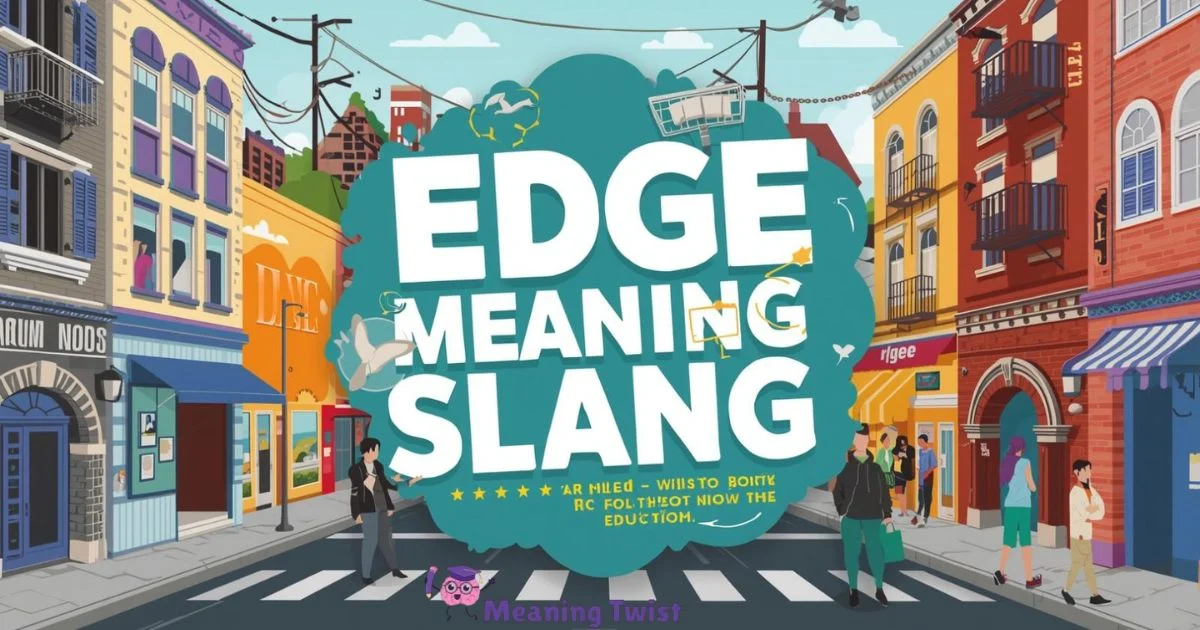
Language never stands still. What starts as a niche phrase can explode across social media, reshape conversations, and suddenly feel unavoidable. One term riding this wave right now is Edge Meaning Slang, and you’ve probably seen it pop up in TikTok captions, comment sections, DMs, memes, and casual chats.
It feels simple.
It sounds familiar.
But its meaning isn’t always obvious.
So what does “edge” actually mean in slang and why are people using it in so many different ways?
This guide breaks down the true meaning of edge in slang, how it’s used in real conversations, the context behind different interpretations, its possible origins, and why it became popular online in the first place.
No guesswork. No recycled definitions. Just clear, accurate, human-first explanations designed to help you understand and use the term with confidence.
Definition Edge Meaning Slang
Edge meaning slang refers to using the word “edge” beyond its literal definition (a border or sharp side) to express emotional tension, heightened arousal, anticipation, or being close to a breaking point. In modern slang, “edge” often describes a state of intensity when mental, emotional, or physical where someone feels stimulated, excited, or pushed to their limits.
Unlike formal dictionary meanings, slang usage is context-driven. The same word can suggest flirtation, frustration, excitement, dominance, or vulnerability depending on how it appears in a sentence. This flexibility is why edge meaning slang has become popular across texting, memes, and social media culture.
At its core, slang “edge” signals being on the verge of something, a reaction, a decision, or an emotional shift making it a powerful shorthand for expressing heightened states.
What Does “Edge” Mean in Slang or Text?
In slang or text conversations, “edge” usually means being close to a strong reaction. That reaction might be emotional, sexual, mental, or situational. People use it to show they feel worked up, stimulated, tense, or intensely engaged.
For example:
- “That video got me on edge” → emotionally stirred or excited
- “You’re edging me” → teasing or building anticipation
- “I’ve been on edge all day” → anxious or stressed
The key idea behind edge meaning slang is nearness close to climax, close to snapping, or close to expressing emotion. Context always clarifies which version applies.
The Growing Glossary of Dating Slang
Online dating, hookup culture, and social platforms have created a fast-expanding vocabulary. Words gain new meanings quickly, and edge meaning slang fits perfectly into this evolving space. It’s commonly used to describe teasing, attraction, power dynamics, and emotional buildup.
Dating slang often favors short, flexible words that feel playful yet suggestive. “Edge” works because it can hint at desire without being explicit, making it easy to use in flirty texts, captions, and private chats.
Common meanings include:
- Teasing or building anticipation
Someone intentionally prolongs desire or excitement. - Sexual arousal without release
Often connected to the concept of edging in intimacy. - Emotional tension
Feeling stirred, vulnerable, or highly affected. - Mental stress or anxiety
Being on edge because of pressure or uncertainty. - Playful dominance or control
Suggesting one person influences another’s reactions.
The Origin and Rise of “Edge” in Modern Culture
The slang usage of “edge” draws partly from the concept of edging in psychology and sexual health, where stimulation is intentionally delayed to increase intensity. Over time, internet communities adapted the term into broader emotional and social contexts.
Platforms like TikTok, Twitter (X), Reddit, Discord, and Instagram accelerated its spread. Short-form content, memes, and viral captions turned “edge” into a recognizable shorthand for heightened states of feeling.
As digital culture favors expressive, layered language, edge meaning slang evolved into a versatile word that feels modern, suggestive, and emotionally charged.
Related post: ONB Meaning in Text: What It Really Means & How to Use It
Core Meaning of Edge Today
Today, edge meaning slang centers on one idea:
being on the verge of a strong response.
That response could be:
- Desire
- Excitement
- Frustration
- Anxiety
- Emotional release
The word captures intensity without spelling everything out. It allows speakers to communicate depth with a single, simple term.
Why People Use “Edge” Today
People use “edge” because it is:
- Short and expressive
- Flexible across situations
- Suggestive without being explicit
- Easy to adapt to tone and context
It lets users hint at complex feelings in a casual, modern way. Whether someone feels teased, stressed, excited, or emotionally stirred, edge meaning slang gives them a quick way to say it.
In digital conversations where speed and impact matter, “edge” delivers both.
Types of Edge in Slang
The slang use of edge isn’t limited to one definition. Instead, it works as a flexible descriptor that shifts based on context. In everyday digital conversations, edge meaning slang usually refers to having a noticeable advantage, sharp quality, distinctive attitude, or standout presence. Below are the most common ways people use it.
Personality Edge
A personality edge describes someone who feels bold, confident, and slightly unpredictable in a good way. It suggests a person who stands out because they’re fearless, expressive, or unapologetically themselves.
People with a personality edge often push boundaries, speak their mind, and bring strong energy into social spaces.
Example:
“She’s got an edge to her, never afraid to say what everyone else is thinking.”
Style Edge
A style edge refers to fashion or appearance that looks modern, daring, or unconventional. It implies someone’s look feels sharp, trend-forward, and intentionally different.
This usage is common in comments about outfits, aesthetics, and personal branding.
Example:
“That all-black fit with silver chains gives you a serious edge.”
Artistic Edge
An artistic edge describes creative work that feels original, experimental, or emotionally powerful. It highlights art, music, writing, or visuals that don’t follow safe formulas.
Creators with an artistic edge often explore deeper themes or unique techniques.
Example:
“His music has an edge; it’s raw and not over-polished.”
Humor Edge
A humor edge points to jokes that are clever, sarcastic, dark, or slightly risky. It doesn’t necessarily mean offensive, but it does suggest humor that pushes past basic or safe punchlines.
Example:
“Her comedy has an edge, but that’s why it’s funny.”
Emotional Edge
An emotional edge describes intensity, vulnerability, or emotional depth in someone’s words or behavior. It often signals strong feelings just beneath the surface.
Example:
“You can hear the edge in his voice. He’s really hurting.”
Edge Meaning Slang Reddit
On Reddit, edge meaning slang often appears in discussions about personality traits, aesthetics, dating appeal, and creativity. Users typically describe edge as a combination of confidence, uniqueness, and authenticity.
Many Redditors explain edge as:
- Having a distinct vibe or aura
- Being interesting without trying too hard
- Standing apart from mainstream behavior
In dating or attraction threads, edge is frequently associated with intrigue and magnetism. In creative communities, it’s linked to originality and bold expression.
Across subreddits, one idea stays consistent: edge equals noticeable individuality.
Positive vs Negative Edge
Slang edge can carry either a positive or negative tone depending on how it’s used.
Positive Edge
- Confident
- Bold
- Stylish
- Creative
- Magnetic
Negative Edge
- Aggressive
- Hostile
- Overly intense
- Arrogant
Context determines which meaning applies. When someone says a person “has edge,” they usually mean it as a compliment. When they say someone “has an edge to them,” it may suggest tension or attitude.
Understanding tone, situation, and speaker intent is key to interpreting edge meaning slang correctly.
Learn more: JP Meaning in Text: Definition, Usage & Social Media Secrets
Real-Life Examples of Edge
In everyday slang, edge usually describes something or someone that feels intense, bold, provocative, or slightly dangerous in a cool way. The meaning often shifts based on context, tone, and platform.
Examples in conversation:
- “That outfit has an edge.” → It looks bold, stylish, and unconventional.
- “Her personality has a real edge.” → She comes across as confident, sharp, and not afraid to challenge norms.
- “This movie is too edge for me.” → It feels dark, graphic, or emotionally heavy.
- “He talks with edge.” → His words sound blunt, raw, or aggressive.
These real-life uses show how edge meaning slang centers on attitude, intensity, and boundary-pushing energy, not just one fixed definition.
Edge vs Edgy: Understanding the Nuance
Although related, edge and edgy don’t always communicate the same thing.
Edge
Refers to a quality or vibe. It often feels controlled, stylish, or intentional.
Example: “That brand has an edge.”
Edgy
Describes behavior or content that tries to provoke or shock. It can be positive or negative.
Example: “That joke felt edgy.”
In slang usage, edge usually sounds more complimentary, while edgy can imply someone is pushing boundaries too hard or forcing controversy.
Edge in Fashion and Aesthetics
In fashion, edge meaning slang points to looks that feel bold, rebellious, or nontraditional.
Common elements include:
- Dark color palettes
- Leather, chains, studs
- Asymmetrical cuts
- Heavy makeup or sharp styling
When someone says, “Your style has edge,” they’re praising your ability to stand out while maintaining confidence and intention.
Edge in Music and Art
In creative spaces, edge describes work that feels raw, experimental, or emotionally charged.
People might say:
- “That album has an edge.” → It sounds intense and fearless.
- “His art has an edge to it.” → It challenges comfort zones or social norms.
Here, edge signals creative risk-taking and authenticity.
Edge in Humor
Humor with edge often walks a thin line.
It can be:
- Dark
- Sarcastic
- Ironic
- Socially aware
Example: “She has a sharp, edgy sense of humor.”
In slang, edge in comedy suggests intelligence and boldness, but it can also cross into offensive territory depending on delivery.
Psychological and Social Roots of Edge
The popularity of edge meaning slang connects to a deeper desire for individuality and self-expression.
People use edge to:
- Signal uniqueness
- Reject blandness
- Show emotional toughness
- Create identity
Online culture rewards distinct voices, which makes “edge” a powerful social label.
Authentic vs Fake Edge
Not all edges feel real.
Authentic edge
- Comes from personality or lived experience
- Feels natural and consistent
Fake edge
- Feels forced or exaggerated
- Exists mainly for attention
Example: “He tries too hard to be edgy.”
True edge resonates because it feels earned, not performed.
Edge and Emotional Depth
Edge isn’t just about looking tough.
In many cases, it reflects complex emotions, such as:
- Anger
- Frustration
- Passion
- Vulnerability
Someone with emotional edge may express feelings in a direct, intense, and unfiltered way. This depth is why edge often feels powerful rather than shallow.
In slang, edge ultimately represents raw honesty wrapped in confidence, a blend that continues to shape modern communication.
How to Choose the Right Alternative
Choosing the right alternative to edge meaning slang depends entirely on context, tone, and audience. Start by asking what you want to express: confidence, excitement, attraction, tension, or risk. If “edge” feels too vague, swap in a clearer slang term that matches your intention.
For bold confidence, words like drip, aura, or sauce may fit better. If you’re describing emotional tension or anticipation, try hyped, locked in, or on one. When referring to sexual or suggestive tension, use caution and consider softer phrases like teasing, building up, or playing it cool.
Platform matters too. TikTok favors trend-driven slang, while text messages allow more personal phrasing. The best choice always preserves your meaning without confusing or offending your reader.
Common Mistakes to Avoid with “Edge”
One major mistake is assuming edge slang meaning is always positive. In reality, it can be neutral, flattering, or negative depending on usage. Another error is using it without enough context, which leaves readers guessing.
Avoid forcing “edge” into professional conversations. It belongs in casual or social settings, not formal writing. Also, don’t overuse it. Repeating trendy slang too often can make your message feel unnatural.
Finally, never assume everyone understands the same definition. Online slang evolves fast, and meanings shift. When clarity matters, choose a more direct word.
Future of “Edge” in Slang (2026 & Beyond)
Slang tied to internet culture changes rapidly, but edge meaning slang shows signs of staying power because of its flexibility. It works across humor, attraction, motivation, and emotional intensity.
By 2026 and beyond, “edge” will likely develop more niche meanings inside gaming, creator culture, and short-form video communities. We may also see new variations built from the word, similar to how other slang evolves into verbs or adjectives.
Even if its definition shifts slightly, the core idea of heightened energy, tension, or standout presence will probably remain.
Compliment vs Insult: When Edge Shines
“Edge” becomes a compliment when it highlights confidence, uniqueness, or appeal. For example, saying someone has “edge” can imply they stand out in a cool or intriguing way.
It turns into an insult when it suggests trying too hard, being awkward, or seeking attention. Tone and delivery decide everything.
If you’re unsure how it will land, add context. Pairing “edge” with positive language keeps it flattering. Pairing it with criticism pushes it negative.
Modern Variations and Related Slang
Several modern slang terms connect closely to edge meaning slang, including:
- Drip – stylish confidence
- Aura – overall vibe or presence
- Sauce – personal flair
- Locked in – focused and intense
- On one – energized or hyped
These words overlap in meaning but offer more precision depending on what you want to say.
Quick Examples of Edge in Sentences
- “That outfit has a real edge.”
- “He’s got an edge lately, way more confident.”
- “She brings edge to everything she posts.”
- “That joke was edgy, but funny.”
- “You can feel the edge in his voice.”
These examples show how edge slang meaning shifts based on tone and situation.
What Does EDGE Mean on iPhone
When people ask what EDGE means on an iPhone, they’re usually talking about two very different things: network technology and slang usage.
On an iPhone, EDGE (all caps) refers to Enhanced Data rates for GSM Evolution, a 2G mobile data network. If you see “EDGE” in your status bar, it means your phone is connected to a slow cellular data connection, typically in areas with weak coverage or limited infrastructure. Browsing, messaging, and streaming may feel noticeably slower.
In slang, however, edge meaning slang has nothing to do with mobile networks. Instead, it describes a vibe, attitude, or emotional state often implying intensity, boldness, tension, or being on the verge of something. Understanding context is key to knowing which meaning someone intends.
Examples of How “Edge” Is Used in Real Conversation
People use edge casually to express mood, style, or emotional tension. It can suggest confidence, darkness, excitement, or unpredictability depending on context.
Here are some natural, human-sounding examples:
- “That song gives the whole playlist an edge.”
- “He’s been on edge all day since the interview.”
- “Her outfit has a dark edge, and I love it.”
- “The movie had just enough edge to keep it interesting.”
- “I’m not mad, just a little on edge right now.”
In each case, edge slang meaning reflects a sense of intensity, sharpness, or emotional charge rather than a literal edge.
How “Edge” Differs from “Edgy”
Although related, edge and edgy serve different roles in slang and everyday speech.
They are closely related but not identical:
- Edge → A noun describing intensity, tension, or sharp character
- Edgy → An adjective describing something that feels bold, risky, dark, or unconventional
For example:
- “That artist has an edge.” (noun)
- “That artist is edgy.” (adjective)
In short, edge meaning slang describes the quality, while edgy describes something that possesses that quality.
Why “Edge” Is So Popular Among Young People
The word fits perfectly into modern digital expression short, flexible, and emotionally rich.
Reasons:
- Easy to use across texts, comments, and captions
- Conveys complex emotions in one word
- Matches aesthetics-driven online culture
- Works for music, fashion, moods, and personality
- Sounds cool without being forced
Social platforms reward language that feels compact but expressive, and edge slang delivers exactly that. It lets young people communicate attitude, depth, and vibe instantly without long explanations.
Conclusion
Slang has always been a form of storytelling, a way people shape identity, emotion, and culture through a few powerful words. Edge meaning slang captures that perfectly, blending attitude, intensity, and vibe into a term that feels modern yet timeless. It’s sharp. It’s expressive.
Whether someone uses it to describe a mood, a style, or a sense of emotional tension, “edge” delivers meaning without overexplaining. That simplicity fuels its popularity across social media, texting, music culture, and everyday conversation. The word adapts, evolves, and keeps its impact.
Understanding edge meaning slang isn’t just about definitions it’s about recognizing how language mirrors how people feel and who they are becoming.
Some words fade.
Some words stick.
Edge is one of the words that leaves a mark.
FAQs About Edge Meaning Slang
1. What does “edge” mean in slang?
In slang, edge refers to a sense of intensity, sharpness, or emotional tension. It can describe a bold personality, dark aesthetic, strong mood, or someone who feels slightly on edge or charged with emotion.
2. Is “edge” slang positive or negative?
Edge meaning slang can be positive or neutral depending on context. It often suggests confidence, uniqueness, or attitude, but it can also imply stress, nervousness, or emotional strain.
3. How is “edge” used in texting and social media?
People use edge in captions, comments, and chats to describe vibes, moods, music, outfits, or personalities. It’s a quick way to express depth or intensity without long explanations.
4. What’s the difference between “edge” and “edgy” in slang?
Edge is a noun describing the quality of intensity or sharpness. Edgy is an adjective describing something that has that quality, such as edgy fashion or edgy humor.
5. Why is “edge” popular among Gen Z and young users?
The word is short, expressive, and flexible. It fits perfectly into modern online culture where quick, emotionally rich language performs best.

Hi, I am Joey, the admin of meaningtwist.com. I simplify deep meanings and twist ordinary words into extraordinary insights to spark your curiosity and clicks!